Friday, 7 December 2012

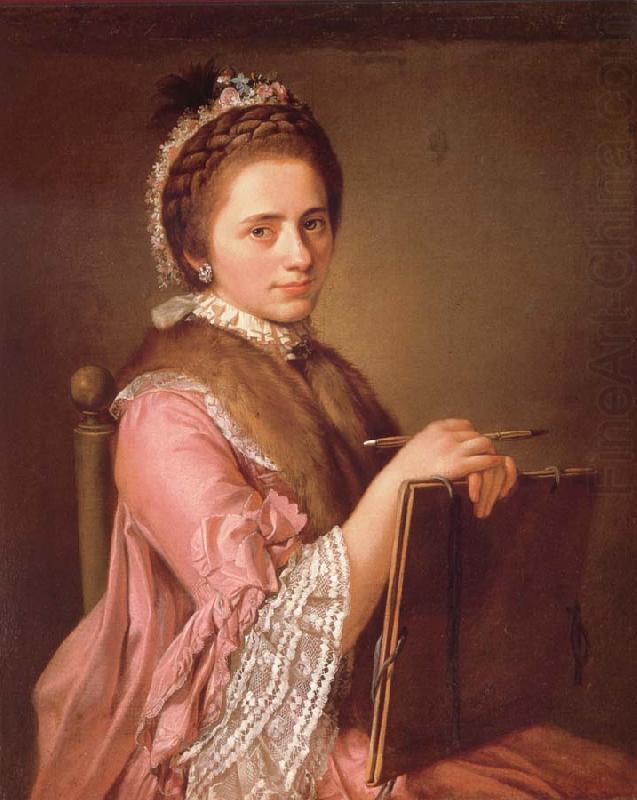
And the lady wore fur

We had a terrific snowstorm in Stockholm Wednesday, luckily for me on my day off, as basically all public transportations came to a standstill. I also have a really bad cold and feel chilly, so to feel a bit warmer I dug out a couple of pictures of 18th century ladies wearing fur.

I admit, winter wear, 18th century style, don't look so warm to me. Fur lined capes and muffs must be wamr enough, but dainty shoes? Not very practical to me.


Winter


Madame Mole Raymond by Élizabeth Vigée Le Brun. 1787.
 

Louise Henriette de Bourbon, Duchesse de Chartres and Duchesse d'Orléans

Comtesse de Tillieres by Jean-Marc Nattier, 1750


Madame Francois Tronchin by Jean-Etienne Liotard, 1758


Maria Fredericke van Reede-Athlone at age 7 by Jean-Etienne Liotard


Henriette Caroline Christine of Hesse-Darmstadt by Johann Georg Ziesenis
 
It seems a bit uncomfortable to wear a fur choker, but it does finish off the look and would provide a good way to get rid of fleas- just take off the choker and shake over an open fire...

Mme Georges Gougenot de Croissy by Jean-Baptiste Greuze, 1757
 

Mrs. Wilbraham Bootle by George Romney, 1781


Marie Dolignon Mrs Philip Dauncey by James Northcote, 1789

Empress Maria Theresa by Jean-Etienne Liotard
A couple of years ago I made a green velvet gown with a fur trim, basically identical to this one. Only I saw the painting for the first time afte rmy gown was made.


Another version, I assume.


Angelika Kauffman by Nathaniel Dance
This one look so warm! It seems to be fur-lined, not just fur decorated. 
Lady said to be Madame Katinka by Nathaniel Dance.
It has been living on my harddrive for years, so I don't know where I found it now.

Apart from the fur, I love that her hair is just powdered around her face. A much easier look to pull off for a re-enactor than a fully powdered hair do, I think.


Mélanie de Forbin by G. Louis Le Barbier Le Jeune


Marie-Josephe of Saxony, Dauphine of France by Jean Martial Fredou, 1747


Maria Antonia von Bayern by Pietro Antonio Graf Rotari


Maria Josepha von Bayern probably by Martin van Meytens. ca. 1765


Queen Maria Carolina by Francesco Liani

The fabric looks like it has spots woven into the fabric. Very pretty.

Madame Freret-Dericour by Joseph-Siffred Duplessis, 1769


Queen Sophie Dorothea of Prussia by Antoine Pesne, 1737


The Baroness Bonne-Marie-Joséphine-Gabrielle Bernard de Boulainvilliers by Elisabeth Vigée-Lebrun, 1785


Tuesday, 4 December 2012

Almost here

Gustafs Skål's calendar is now at the printers and we are eagerly waiting for it. I have seen all the photos, but it will be quite exiting to see it all finished! The price will be 75 SKr for members of Gustafs Skål and 100SKr for everyone else, shipping excluded. If you are interested in buying one, mail me at isis.33 @ passagen.se It's a bit hard for me to estimate shipping until I have the calendar and know the weight shipping varies from country to country, but I will get back to you with a full price as soon as I can.

The pictures are details from two of the months.

Monday, 26 November 2012

Victorian circus

Fraulein Frauke Presents took place Saturday and being in good form I stitched on my costume to the last minute. The theme, if you remember, was Victorian circus and I went as a line dancer, complete with a small parasol.


You may notice that the bodice is not green as planned, but purple. That is because I found that I had too little of the green silk- one of the dangers when you buy fabric first and make the pattern after. Luckily I have a lot of cotton sateen that I inherited from my grandmother, so I could make a last minute change. I also managed to go down with a temperature for two days so my sewing got behind schedule. So I’m sort off pleased with my costume. I like the colours and I do think that I have managed to evoke a Victorian feel to it. I’m pleased with the yellow fringe that very nicely took up the colour of the parasol.


However, the fit could have been a lot better. I fitted it on myself with no help, apart from J placing a few pins after my direction. The back was a bit too loose and the bodice was a bit too snug around the hips. It would also have benefitted from a crisper lining and a few well-placed bones. The plan is to evolve the bodice into an 1880’s ball gown, but it will need some re-work for that! As usual I had great fun. The guests had really outdone themselves; I really think that more and more people dress up after the current theme for every new event. It is also such a nice club. Everyone is so friendly and I have never been to a place where you get spontaneous compliment by strangers. And I have always loved masquerades and now I have reason to think up new costumes several times a year.


Klara the Lion, who won price for best costume and Pimpinett. The other winner was a wonderful bearded lady in a striped bustle dress.


The best costumes won a bottle of champagne, but other good ones got a free drink. And I got one! And so did Betty who looked really great as a snake charmer with a truly Victorian Cleopatra-flair.


The rather limpid latex snake. There were other snakes around, but no one as big as Betty’s!


A rather bad picture of the smallest animal on the party. My friend Ragnar had captured a ferocious rhino and caged it. Unfortunately it drunk too much beer and fell of its peg.


A few pictures of the fitting process. I drafted the pattern myself, using a bodice template in Patterns of Fashion as a guide. It evolved a bit as you can see.


Saturday, 17 November 2012

A few 18th century paintings of interest

Here's a little collection of 18th century paintings that depicts clothes that are a bit unusual and interesting. First of is this wonderful portrait. Isn't it amazing? An old woman portrayed with dignity and beauty. I also find her cap interesting. I can't recall any other 18th century portrait with such a peak down the forehead.

Portrait of An Old Woman
by Balthasar Denner (or possibly Christian Seybold),
probably the first half of the 18th century

Plaid isn't all that common on 18th century portraits, but they crop up from time to time. I really like the kitchen maid's plaid apron, but her spotted caracao even more. Not to mention the colour combination. I think I need this outfit!

Plucking the Turkey by Henry Walton, 1776

This girl was a member of the Moravian church. Click on the link for more paintings of Moravian women, they have a rather distinct front-laced bodice that you can't see here because of the neckerchief. This girl is the only one in plaid, though.

Young Moravian Girl
by Johann Valentin Haidt , painted before 1780


A Scottish lady of a Jacobite inclination, so her choice of fabric for her riding habit is not so surprising.

Portrait of a Jacobite Lady
by Cosmo Alexander, 1745-50s

This fabric in her brunswick is just gorgeous! I wouldn't mind getting my mitts on something like that.

Princess Frederika Sophia Wilhelmina of Orange by Johann Georg Ziesenis, 1768-69
After plaids it feels natural to progress to stripes.


Maria Luisa de Parma, later Queen of Spain by Laurent Pecheux, 1765

A very clever use of the fabric here, I think.

Infanta Maria Josefa de Borbon by Giusseppe Bonito, 1758-59
 And last of fabric patterns; flowers. Foliage crazy, anyone?

Victoire of France by Jean-Marc Nattier, mid-18th century
I scanned this picture several years ago from a book and I'm sorry that the quality is so bad. I have never seen this kind of buttoned shirt on an 18th century woman anywhere else. The painting belong to Nationalmuseum in Sweden, but the catalouge entry is without picture.


Brita Christina Appelbom by Georg Desmarées, painted before 1757
This is clearly a regional costume, Strasbourg to be exact. The hat is truly in a category in itself and the stays are interesting in itself.

La Belle Strasbourgeoise by Nicolas de Largillière, 1703

Does anyone know anything more about this rather curious layering? To me it looks like a chemise, probably stays, a (padded?) jacket with another jacket, or gown, laced over it. I think it is pretty and it ought to add warmth. I know I have seen more paintings than the two here and I think all have been French. Seems to me to be a bit too practical to be just an artist's imaginatiopn so I am apt to think it was an actual fashion, but perhaps a rather regional one.

Portrait of Mlle Lavergne, the niece of the artist
 by Jean-Etienne Liotard, 1746
Portrait of a young lady with a courtly letter in hand
by Jean-Baptiste Mallet
This one is interesting just because ot the complete dissarray of hair and clothes. Especially the hair as it gives a glimpse on how hair was arranged.

The Broken Mirror by Jean-Baptiste Greuze, 1763

There are several extant examples of stays with tie-on sleeves. Here is a somewhat rarer example on them in a painting.

Detail from Women Working on Pillow Lace by Giacomo Ceruti, 1720s

Thursday, 15 November 2012

Sewing organization


The Hard-working Mother
by Jean-Baptiste-Simeon Chardin, 1740


 I’m slowly trying to organize my sewing better and have realized that it’s really four parts of it that needs to be sorted out; Fabric, projects, sewing notions and the sewing room itself. This is a very ongoing project and I have reached different levels of orderliness.


Fabrics: My one and only organizational triumph. I found this system somewhere online some seven years ago and spent quite some time putting it together. But it works! For seven years I have known exactly what I have and where it is. Nowadays when I don’t have room for my fabrics in the apartment it is even more useful. Here’s how to do it:

It is a card system so you need a box and cards + big boxes with lids. Number the big boxes so that the number is easy to see. Take a fabric and iron it if you need to. Then measure it, both length and width. On the card you pin a fabric sample, write down what kind of fabric it is, the measurement. If you have an idea or have earmarked the fabric for a special project, write that down as well. Fold the fabric and put it in a big box and then write down the numberof the box on the card. Continue until all your fabric has been processed.
The beauty of this system is that you don’t have to sort your fabrics or have them visible to have an overview. When I need something or just see inspiration I go to my cards, find what I need and go to the right box and get it. No more digging through boxes and shelves, leaving most of it on the floor. After the first time when I sorted all my fabrics I have only need to keep up when I buy something new and remove the card (I use a pencil so I can erase and re-use them) when I have used up something for a project.


Sewing Girl by Antonio Amorosi, ca 1720
 Projects: I have too many of them going on and even if I have tried to not start new one this year, I have not always succeeded I couple of weeks ago I sat down and listed all my projects and it gave me a really good overview of what I need to do. I hope it will prove as useful a tool as it seems. I recently got myself an iPhone so I used a free app, but this method would work as well with pen and paper.

I made four categories: 18th century costumes, historical costumes from any other period, the 40’s wardrobe project and then one for everything else. That made four lists and on every list I assigned every project an A, B or C. A is for projects have started and need to finish ASAP. B is for projects I have started but can wait a little and C is for projects planned but not started.

They looked like this (they are in Swedish, sorry)

Then I took the A’s from all the lists and made a new one, giving them the same treatment, A, B or C. Voila, a list with all my most urgent projects, listed after urgency. The plan is to work through the A’s and then elevate just one project on each list to A status. Wish me luck!

Sewing notions: Here I fail completely. At the moment I have sewing notions spread to two rooms and six different shelves, closets and drawers. And the notions aren’t neatly collected after type either, at least not everything. This I know exactly where my sewing tread, boning, pearls and needles are, but not at all sure on embroidery yarn, flowers and spangles. I don’t really know how to solve this. Any good ideas?

Women Working On Pillow Lace by Giacomo Ceruti ca 1720
The sewing room: Isn’t just a sewing room, but also serves as J’s study. At the moment, though, my stuff is spread all over. This is how my sewing table looked a few days ago:


That mess is cleared now, but most of the rest of the room looks like this as well. A large part is due to sewing notions without a home. A massive de-cluttering is really due here.


Thursday, 25 October 2012

Planning a Victorian circus outfit

Fräulein Frauke Presents is less than a month away and I have at least decided on my costume and bought the fabric. Now I just have to sew it together. I have decided to go as a line dancer, happily noticing that they look rather sturdily built in the 19th century. I plan to make a version of this costume- a boned bodice with a pair of short and puffed bloomers.


Emily Schadel

Leona Dare

Poster for Leona Dare

Miss Farrinton


Nice colours, yes? Dupion silk from Cheap Fabrics, the green for the bodice, the rose is for the bloomers.


The bloomers ought to be pretty easy to make, but I do worry a bit over the bodice. I must make a pattern myself; there is no getting around it. I strongly suspect that I would need to alter a bought pattern so much that it will probably be easier to make it from scratch anyway. I hope I can get it to fit properly, though.

The Trapeze Artist Standing on Her Trapeze by Jules Garnier

I also need to get a small parasol. Can’t be a proper ballerina without a parasol, can I?

Speaking of line dancers, if you want to know a little about a real Victorian ballerina, read the tragic story about Elvira Madigan and her lover Count Sparre at Rags of Time.

Related Posts Plugin for WordPress, Blogger...